
Parallel & Perpendicular Lines Investigation
PREVIEW · mylessonkit.com
mylessonkit.com/store/linear-logic-studio
mylessonkit.com/store/linear-logic-studio
mylessonkit.com/store/linear-logic-studio
preview · mylessonkit.com/store/linear-logic-studio
Urban Planner Field Guide
Core Geometry Reference Notes
City planners and cartographers use geometry every day to design safe, efficient neighborhoods. Parallel lines lie in the exact same plane and remain equidistant from each other at every point. No matter how far across the city they extend, true parallel streets will never meet or cross. Perpendicular lines intersect at one specific point to form four square corners, known as right angles, measuring exactly ninety degrees. When avenues cross at ninety degrees, traffic lights manage balanced, orderly four-way intersections. Other streets may cross at slanted angles, creating acute and obtuse corners; these are intersecting lines that are not perpendicular. By identifying these relationships on a street grid, surveyors can navigate maps, route emergency vehicles, and construct sturdy infrastructure across town.
Parallel Lines
Perpendicular Lines
Right Angles
Intersecting Lines
Explain how you can verify whether two crossing streets form a true perpendicular intersection.
PREVIEW · mylessonkit.com
mylessonkit.com/store/linear-logic-studio
mylessonkit.com/store/linear-logic-studio
mylessonkit.com/store/linear-logic-studio
preview · mylessonkit.com/store/linear-logic-studio
Downtown Sector Survey
Grid Map Line Identification
Analyze the downtown street layout shown below to identify parallel avenues and perpendicular intersections.
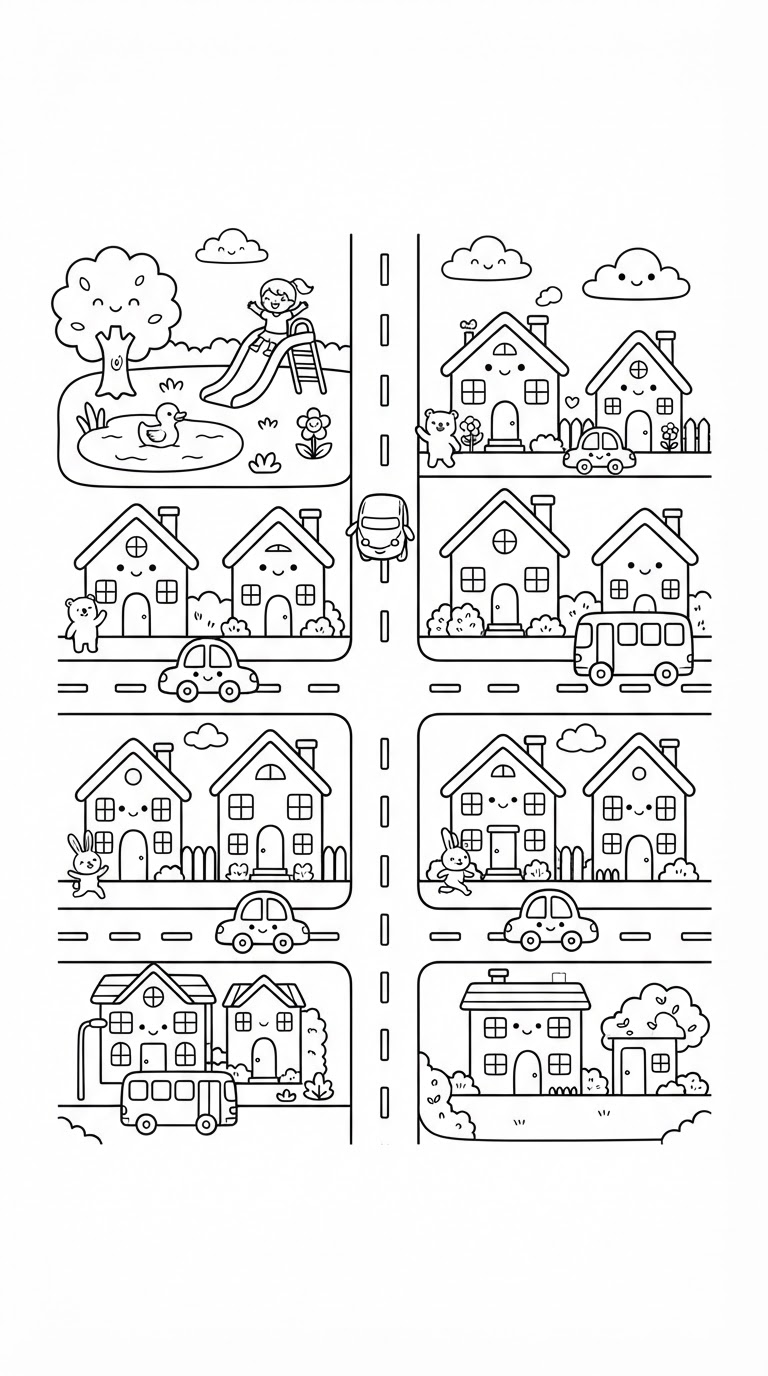
List two pairs of parallel streets and explain how you know they never intersect.
PREVIEW · mylessonkit.com
mylessonkit.com/store/linear-logic-studio
mylessonkit.com/store/linear-logic-studio
mylessonkit.com/store/linear-logic-studio
preview · mylessonkit.com/store/linear-logic-studio